What’s the Difference Between Possession and Possession for Sale in San Diego?
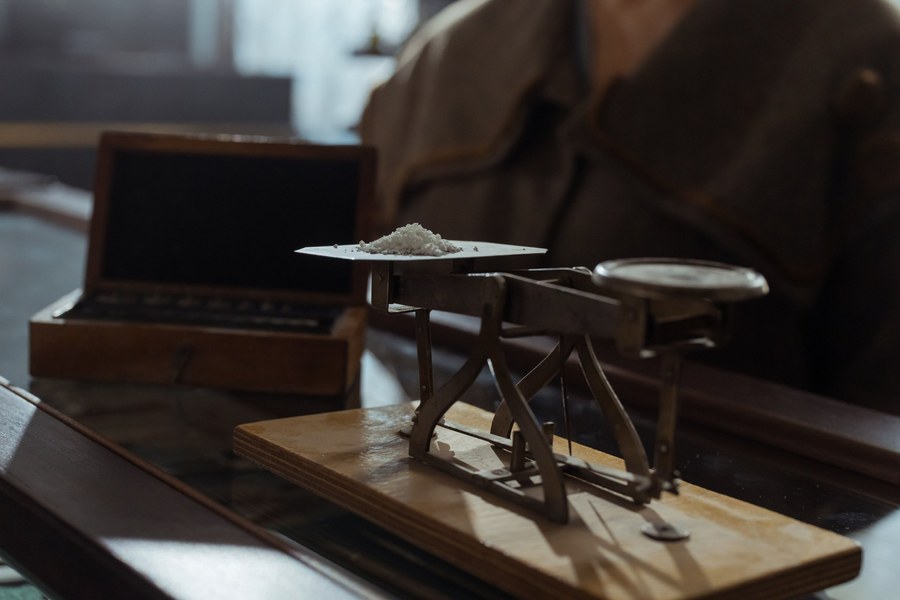
Most people assume the difference between simple possession and possession for sale comes down to how much you had on you. It doesn’t. You can be charged with possession for sale carrying a baggie’s worth, and you can escape a sale charge with a much larger stash. What actually separates a misdemeanor from a felony is one word: intent. And intent is almost never proven by drugs alone.
That distinction is the difference between a case you might resolve through diversion with no conviction, and a felony that carries prison exposure and follows you, potentially, for life. David P. Shapiro Criminal Defense Attorneys defends drug crime cases across San Diego County, and this guide breaks down where that line actually gets drawn.
What Is Simple Possession Under California Law?
Simple possession means you had a controlled substance for your own use, with no evidence you intended to sell it. Under Health & Safety Code section 11350, possessing a narcotic like cocaine or heroin is now a misdemeanor for most people, punishable by up to one year in county jail.¹ Proposition 47 made that change in 2014.²
For most defendants, Prop 47 turned simple narcotic possession into a straight misdemeanor.² Felony exposure now exists only in narrow circumstances, like two or more possession priors, a prior “super strike” conviction, or a duty to register under Penal Code section 290.¹
To convict you of simple possession, the prosecution has to prove you knew the substance was present, knew what it was, and that you had a usable amount.¹ Notice what’s missing from that list. There’s no requirement that you intended to do anything with it. That’s the entire ballgame in these cases. The moment the state adds intent to sell, the charge, the penalties, and your options all change.
What Makes a Charge “Possession for Sale”?
Possession for sale is the same conduct as simple possession plus one added element: the intent that the drugs be sold, by you or someone else. Under Health & Safety Code section 11351, that intent transforms a misdemeanor into a felony punishable by two, three, or four years in county jail.³
Here’s what surprises people. You don’t need to have sold anything. No cash has to change hands. No buyer has to exist. The prosecution only has to prove that when you possessed the drugs, you intended for them to be sold.³ Intent is a state of mind, and the state proves it with circumstances, not confessions.
The parallel statute for methamphetamine is Health & Safety Code section 11378. Same structure, same felony consequence. If the alleged conduct goes further, to actual selling or transporting for sale, the charge jumps again to Health & Safety Code section 11352, which carries three, four, or five years.⁴
So the real fight in most of these cases isn’t whether you possessed drugs. Often that part is conceded. The fight is whether the “for sale” label sticks. And that turns entirely on the evidence the prosecution stacks up to prove what was in your head.
What Evidence Do Prosecutors Use to Prove Intent to Sell?
Because no sale needs to occur, prosecutors build intent from circumstantial evidence. A narcotics detective testifies as an expert that the quantity, packaging, and surrounding items are “consistent with sales, not personal use.”³ That opinion is the backbone of most possession-for-sale cases, and it’s more challengeable than it looks.
Here’s the stack they assemble:
Quantity beyond personal use
More than a personal-use amount suggests distribution. But “personal use” is not a fixed number. A heavy user’s stash can look like a dealer’s inventory to someone who doesn’t understand tolerance and buying habits.
Packaging
Drugs divided into individual baggies or bindles read as pre-portioned sales inventory. One larger quantity in a single container reads more like personal supply.
Scales, ledgers, and cash
A digital or triple-beam scale, a pay-owe sheet tracking debts, and large amounts of cash in small denominations all get pulled into the sales narrative.
Phones and messages
Multiple cell phones and text threads about prices, quantities, or meetups become exhibits.
The absence of paraphernalia
This one cuts both ways and is often overlooked. No pipe, no needle, no personal-use tools. Prosecutors argue that absence means you weren’t using, so you must have been selling.
In our experience, the difference between a possession charge and a possession-for-sale charge often comes down to how a detective characterizes a scale or a handful of baggies. That characterization is an opinion, and opinions can be challenged. So the next question becomes obvious: how much does quantity alone actually decide?
How Much Drug Quantity Turns Possession Into Possession for Sale?
No specific weight automatically converts possession into possession for sale. California law sets no bright-line threshold. Quantity is one factor a detective weighs alongside packaging, cash, scales, and messaging, but weight alone rarely decides the charge.³
This trips people up constantly. They assume there’s a magic number, that under X grams is “personal” and over it is “sales.” There isn’t. A large amount held by a documented heavy user can still be personal possession. A small amount divided into ten labeled baggies, sitting next to a scale and a ledger, can support a sales charge.³
Weight does matter at the extremes. Very large quantities of heroin, cocaine, or cocaine base trigger sentencing enhancements that add years to a felony sentence.³ And in the Southern District of California, large-quantity cases carry a shadow risk most people never consider. Federal prosecutors can pursue possession with intent to distribute under 21 USC 841, which brings mandatory minimums that state court doesn’t.⁵ Given San Diego’s proximity to the international border, that’s not a hypothetical for higher-volume cases. It’s a reason to take the charge seriously from day one.
Can You Be Charged Without the Drugs on Your Body?
Yes. You don’t have to physically hold drugs to be charged with possessing them. California recognizes “constructive possession,” which means you had knowledge of the substance and the right to control it, directly or through someone else. Drugs in your car’s glovebox or your bedroom can be legally “yours” even if they never touched your hands.¹
This is where a lot of people get blindsided. A shared apartment. A borrowed car. A group in a vehicle when it gets pulled over. Suddenly police are talking about drugs the person never saw, in a space they shared with others.
Constructive possession is also where real defense opportunities live. The prosecution has to prove you knew the drugs were there and that you had control over them. In a shared space, that’s often far from clear. If three people had access to a car, whose meth was in the center console? Knowledge and control are questions of fact, and reasonable doubt lives in the gaps. Our attorneys look hard at who actually had dominion over the space and the substance, because a weak constructive-possession theory can unravel the whole case.
Penalties Compared, and Why the Gap Is So Wide
The practical distance between these charges is enormous. Simple possession is typically a misdemeanor capped at one year in county jail, often resolved without any jail at all.¹ Possession for sale is a felony carrying two, three, or four years, and it’s generally ineligible for the diversion programs that make simple possession survivable.³
But custody time isn’t the real story. The wider gap is what happens to the rest of your life.
A felony drug-sale conviction is one of the most immigration-toxic charges in the system. For a non-citizen, it can mean deportation, full stop. For an active-duty service member stationed at Camp Pendleton, Miramar, or Naval Base San Diego, it’s career-ending. It shows up on background checks, threatens professional licenses, and closes doors that a misdemeanor might leave open.
That’s why the “for sale” label deserves a real fight. It isn’t a minor upgrade. It’s a different category of consequence.
Can a Possession for Sale Charge Be Negotiated Down to Simple Possession?
Yes, and it happens regularly. Because the “for sale” element rests on a detective’s interpretation of circumstantial evidence, that interpretation can be contested. When the indicia of sale are thin, the defense can push to knock the felony sale charge down to simple possession, which reopens diversion and dismissal paths.³
Think of it as attacking the weakest link. The possession part is often solid. The intent part is an inference built from a scale here, a few baggies there, some cash. In our experience, our attorneys regularly see the San Diego County District Attorney file the felony “for sale” charge when the misdemeanor would fit the facts just as well. We can, and will, push to have a possession-for-sale charge reduced to simple possession when the facts support a position to do so.
The stakes of that reduction are huge. It’s the difference between a felony with prison exposure and a misdemeanor eligible for programs that leave you with no conviction at all. Which raises the question that matters most to almost everyone facing this: is diversion on the table?
Is Drug Diversion Available for Possession for Sale?
Generally, no. California’s core diversion pathways, including deferred entry of judgment under Penal Code section 1000 and Prop 36 treatment under Penal Code section 1210, are built for simple possession and personal-use conduct. Possession for sale is commercial conduct, and the law excludes it from those programs.⁶ ⁷
That exclusion is the single most important practical reason the misdemeanor-versus-felony fight matters so much. Complete a diversion program on a simple-possession case and you can walk away with no conviction on your record. That option vanishes the instant the case becomes a sale case.
San Diego runs active drug-diversion and collaborative-court tracks, so a simple-possession charge here often has a genuine off-ramp. Our team has helped clients pursue diversion pathways that keep a conviction off their record, options that disappear the moment a case becomes a sale case. That’s the whole game. Keeping the charge on the possession side of the line often keeps diversion alive.
Frequently Asked Questions
Does possession for sale count as a strike in California?
No. Possession for sale under Health & Safety Code section 11351 is not a serious or violent felony, so it isn’t a strike under California’s Three Strikes law.³ It’s still a felony with real prison exposure, and prior convictions or enhancements can significantly increase the sentence, but the strike designation itself does not apply.
Can text messages on my phone be used to prove I intended to sell?
Yes. Text threads discussing prices, quantities, or meetups are common exhibits in possession-for-sale cases, since intent is proven circumstantially rather than through any actual sale.³ How those messages were obtained matters, though. An unlawful search of your phone can be challenged, and ambiguous messages don’t automatically prove sales intent.
Will a possession for sale charge appear on a background check if I complete diversion?
Diversion under Penal Code section 1000 generally isn’t available for possession for sale, so this question usually applies to simple possession.⁶ When diversion is available and successfully completed, the charge can be dismissed, which changes what appears on many background checks. Because the rules are technical, confirm your specific situation with an attorney before relying on it.
Contact David P. Shapiro Criminal Defense Attorneys About Possession for Sale in San Diego
The line between simple possession and possession for sale isn’t about how much you had. It’s about intent, and intent is built from circumstantial evidence that can be challenged. Every case turns on its own facts: the quantity, the packaging, the search, who actually controlled the drugs. If you’re facing a drug charge in San Diego, contact David P. Shapiro Criminal Defense Attorneys for a case evaluation to understand where your case falls on that line and what options remain.
References
¹ Health & Safety Code, § 11350 [possession of a controlled substance; misdemeanor punishable by up to one year in county jail for most defendants; elements per CALCRIM No. 2304 requiring knowledge of presence, knowledge of nature, and usable amount].
² Proposition 47 (2014); Penal Code, § 1170.18 [reduced most simple possession offenses under HS 11350 from felonies to misdemeanors and permits resentencing or redesignation of prior felony convictions].
³ Health & Safety Code, § 11351 [possession or purchase for sale of a controlled substance; felony punishable by two, three, or four years under Penal Code § 1170(h); intent to sell proven circumstantially per CALCRIM No. 2302].
⁴ Health & Safety Code, § 11352 [transportation or sale of a controlled substance; felony punishable by three, four, or five years under Penal Code § 1170(h)].
⁵ 21 USC § 841 [federal manufacturing, distributing, or possessing with intent to distribute a controlled substance; penalties vary by substance and quantity, with mandatory minimums for large-quantity trafficking].
⁶ Penal Code, § 1000 [pretrial drug diversion / deferred entry of judgment; available for many simple-possession charges, not for possession for sale].
⁷ Penal Code, § 1210 [Proposition 36 drug treatment diversion for eligible possession offenses].
Author Bio

David P. Shapiro, the managing partner and founder of a leading San Diego criminal defense firm, is driven by an unwavering commitment to providing the best possible representation to his clients facing criminal charges. With a deep understanding of the fear, uncertainty, and concern for one’s future that his clients experience, David approaches each case with empathy and dedication, advocating tirelessly for their rights and freedoms.
Focused on complex and high-stakes cases, David handles a wide range of serious charges, including felonies, violent crimes, sex crimes, drug offenses, and white-collar crimes. Since establishing his practice in 2010, David has earned a reputation as one of San Diego’s most respected criminal defense attorneys.
His firm has been recognized by LawFirm500 as one of the nation’s fastest-growing law firms and was a 2022 Better Business Bureau Torch Award for Ethics Winner. The San Diego Business Journal named David’s firm the 17th Fastest Growing Private Company in San Diego from 2019-2021 and recognized David as one of San Diego’s 500 Most Influential People in 2022. With a strong dedication to his clients and community, David continues to be a driving force in the San Diego legal landscape.
Recent Posts


PRACTICE AREAS


Facing Criminal Charges in San Diego?
Here’s what you need to know to regain control of your future