Can I Fight a Sex Crime Charge if the Only Evidence Is the Accuser’s Statement?
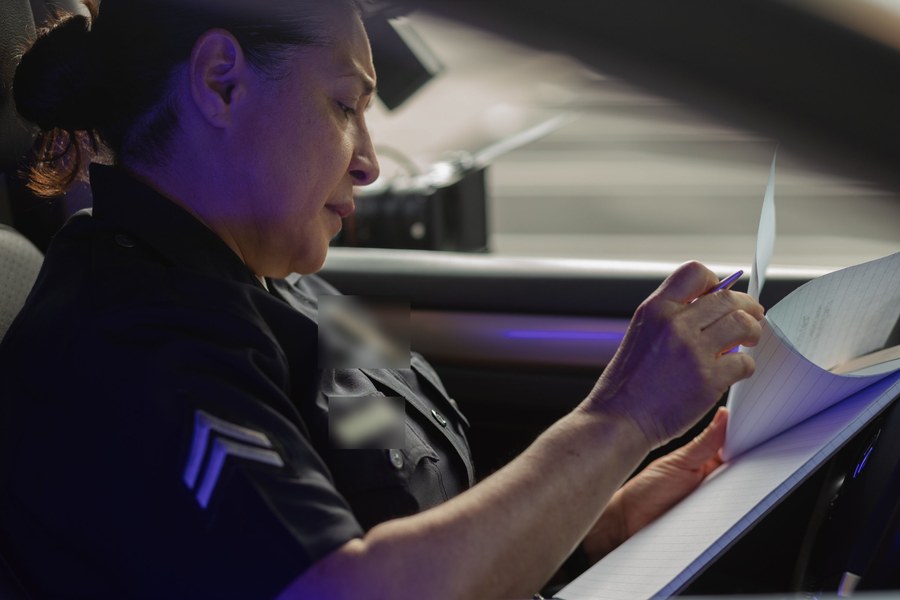
Most people assume that if it’s just one person’s word against theirs, the case falls apart on its own. It doesn’t work that way in California. A jury can convict on the testimony of a single witness, with no DNA, no video, and no physical injury. That surprises almost everyone we talk to, and it’s exactly why panic sets in.
Here’s what you need to understand: “one person’s word” being legally sufficient does not mean it’s enough to convict you. If you or a loved one is facing a charge that rests entirely on an accuser’s statement, that statement is not bulletproof. David P. Shapiro Criminal Defense Attorneys defends people accused of sex crimes across San Diego, and this post walks through how these cases are actually fought.
Can You Be Convicted in California on One Person’s Word Alone?
Yes. Under California law, the testimony of a single witness, if believed by the jury, can be enough to support a conviction, even for a felony sex offense. You do not need DNA, a recording, or a corroborating witness. This is the single most misunderstood fact in these sexual assault cases, and the misunderstanding cuts both ways.
Here’s what that rule does not mean. It does not mean the jury has to believe the accuser. It does not mean the prosecution’s job is easy. The state still has to prove every element of the charge, whether that’s rape under PC 261¹, sexual battery under PC 243.4², or another offense, beyond a reasonable doubt.
Think of it this way. The law says a single statement is legally capable of supporting a conviction. Whether that statement actually survives cross-examination, holds up against prior inconsistent accounts, and convinces twelve people to a moral certainty is a completely different question. That gap between “legally sufficient” and “actually convincing” is where the defense lives.
How the Defense Challenges an Accuser’s Credibility
The defense wins single-witness cases by dismantling credibility, not by producing a smoking gun. When there’s no physical evidence, the accuser’s statement is the case. That means the reliability of that statement becomes the battleground: how it was made, whether it has changed over time, and whether the person had a reason to fabricate it.
In our experience defending San Diego sex crime cases, credibility rarely collapses in one dramatic courtroom moment. It erodes. A detail here that contradicts the first police report. A timeline that doesn’t match a text message. An account that grew more serious each time it was retold.
We attack the statement from several directions at once:
- Prior inconsistent statements — what the accuser told the first officer, the forensic interviewer, and later a prosecutor
- Timeline and physical impossibility — comparing the account against phone records, location data, and witness schedules
- Bias and motive — a custody dispute, a breakup, a financial or immigration incentive
- Manner of disclosure — whether the account emerged spontaneously or after suggestive questioning
We can, and will, challenge the accuser’s account if the facts support a position to do so. That’s the work. And it starts with the details most people overlook.
What Are Prior Inconsistent Statements, and Why Do They Matter?
A prior inconsistent statement is something the accuser said earlier that contradicts what they say now. In a case built on testimony alone, these contradictions are often the most powerful defense tool available, because they let the jury watch the story change in real time.
Consider a common pattern. The accuser tells a responding officer one version. Weeks later, during a recorded forensic interview, a detail shifts. By the time of trial testimony, the account has hardened into something more specific and more serious than what was first reported. None of those versions is under oath at the moment it’s made, but all of them exist on record.
Our attorneys have cross-examined accusers whose stories shifted between the first police report and their trial testimony. When a jury sees three different versions of the same night, the question stops being “did this happen?” and becomes “which version am I supposed to believe, and why did it keep changing?”
That’s the door reasonable doubt walks through. A single inconsistency is not a magic bullet. But a pattern of them, laid out side by side, can be devastating to a case that depends entirely on one person being reliable.
Motive to Fabricate and Why False Accusations Happen
False and exaggerated accusations happen for reasons that have nothing to do with the accused being guilty, and the defense has a right to explore them. Motive to fabricate is not a character attack for its own sake. It’s a legitimate inquiry into whether the person has a reason to lie, misremember, or be pressured into a particular account.
Let’s be real about something. Good people get accused of things they didn’t do. A contested divorce or custody fight can turn an accusation into leverage. A relationship ending badly can produce an account that grows over time. Sometimes a young person’s statement is shaped, without anyone intending harm, by the way an adult asked the questions.
The law takes fabrication seriously enough to criminalize it. Preparing false evidence is a felony under PC 134³, offering false evidence is a felony under PC 132⁴, and attempting to influence a witness’s testimony is charged under PC 137⁵. These statutes exist because the system knows people sometimes manufacture or shape testimony.
We’re not in the business of smearing accusers. We’re in the business of asking whether the account is true. When there’s a documented reason for someone to fabricate or exaggerate, the jury deserves to hear it.
How Pretext Phone Calls Are Used Against You in San Diego Cases
A pretext call is a recorded phone call in which the accuser, coached by law enforcement, calls the accused and tries to draw out an admission. San Diego investigators use them frequently in sex crime cases, often before charges are ever filed, and they can be one of the strongest pieces of evidence the prosecution builds against a single-witness case.
Here’s how it typically unfolds. Detectives sit with the accuser, hand them a script or talking points, and record the call. They’re fishing for anything that sounds like a confession, an apology, or even an ambiguous “I’m sorry” that a prosecutor can later frame as an admission of guilt.
The good news is that pretext calls cut both ways. In our experience, the recorded pretext call is often where the accuser’s account starts to unravel. A person who is innocent frequently denies the allegation repeatedly on the recording. And the accuser, working from a script, sometimes reveals coaching, inconsistency, or a motive the prosecution would rather the jury never hear.
We analyze every second of these calls. What was actually said versus how the DA characterizes it. Whether a vague, confused, or apologetic response is being twisted into an admission it never was.
Does the Lack of Physical or DNA Evidence Help My Defense?
Often, yes. The absence of corroborating physical evidence can be significant, and juries notice it. When an accuser describes an event that would ordinarily leave DNA, injury, or forensic traces, and none exists, that gap is fair game for the defense to highlight.
Adult sex crime cases in San Diego frequently involve a Sexual Assault Response Team medical exam. When a SART exam produces no injuries and no corroborating findings consistent with the allegation, we explain to the jury exactly what that absence means. It doesn’t prove innocence by itself, but it removes the physical scaffolding a jury instinctively expects.
The prosecution will have a ready answer, and you should know it going in. Prosecutors routinely tell juries that a lack of injury is normal, that DNA isn’t always present, that trauma explains delayed reporting. Sometimes those explanations are legitimate. Sometimes they’re a way to paper over a hole in the case.
The reality is that when the state has to explain away the absence of evidence rather than present the presence of it, the case is more manageable than the initial charge suggests. Our job is to make sure the jury weighs that absence honestly instead of glossing over it.
Why the Stakes Are So High, and Why That Matters From Day One
Sex crime charges in California carry some of the harshest consequences in the entire penal code, which is precisely why a single-witness accusation cannot be treated casually. Depending on the charge, exposure can include indeterminate prison terms under sentencing schemes like the One Strike law, plus lifetime sex offender registration.
A conviction for rape under PC 261 is a strike offense and carries mandatory lifetime registration.¹ Even a charge that looks less severe on paper, like statutory rape under PC 261.5⁶ or a wobbler sexual battery under PC 243.4², can reshape your life through registration and collateral fallout in employment, housing, and immigration status.
Because these charges can carry indeterminate prison terms and lifetime registration, our team treats a single-witness accusation with the seriousness it demands from the first phone call. There is no version of this where waiting helps you. Evidence gets stale. The forensic interview and pretext call already exist and are being interpreted right now, by people building a case against you.
The San Diego County District Attorney assigns these cases to a specialized sex crimes unit, not a general-assignment prosecutor. You’re facing a focused team. Your defense has to be just as focused.
Frequently Asked Questions
Can charges be dropped if the accuser recants or stops cooperating?
Sometimes, but not automatically. In California, prosecutors can proceed even if an accuser recants or refuses to cooperate, especially when there’s a recorded statement or pretext call. That said, a recantation can seriously weaken the case. Our attorneys evaluate whether a recantation creates leverage to challenge the charges or negotiate a better outcome.
Will I have to register as a sex offender if convicted?
For many sex offenses, yes. California requires registration under PC 290⁷, and depending on the conviction, that obligation can last for years or for life under the tiered system. Registration affects where you can live and work. This is one of the most serious collateral consequences, and it’s a core reason these cases must be fought hard from the start.
Should I talk to a detective if I know I’m innocent?
No. Even if you’re completely innocent, talk to a lawyer before talking to any detective. Investigators are trained to gather statements they can later use, and innocent people regularly say things that get twisted out of context. Politely decline to answer questions and invoke your right to counsel. Then contact a locally experienced criminal defense attorney.
How long does the DA have to file sex crime charges in California?
It depends on the specific offense and the age of the accuser, and California’s rules on this have changed over the years. Some sex offenses carry extended or, in certain cases, no statute of limitations. Because the timing rules are complex and offense-specific, you should have an attorney review the exact charge and dates against current law.
Contact David P. Shapiro Criminal Defense Attorneys About Defending Sex Crime Charges in San Diego
A case built on nothing but an accuser’s statement is not the airtight case the prosecution wants you to believe it is. The bottom line is that credibility, inconsistencies, motive, and the absence of physical evidence are all fair ground to fight on, and every accusation has its own facts. If you’re facing a sex crime charge in San Diego, contact David P. Shapiro Criminal Defense Attorneys to discuss your situation in a case evaluation. Protect your freedom. Protect your future.
References
¹ Penal Code, § 261 [rape defined as an act of sexual intercourse accomplished without consent by force, violence, duress, menace, or fear; a serious and violent felony requiring lifetime registration].
² Penal Code, § 243.4 [sexual battery; wobbler punishable as a misdemeanor or, under specified aggravating circumstances, a felony].
³ Penal Code, § 134 [“Every person guilty of preparing any false or ante-dated book, paper, record, instrument in writing, or other matter or thing, with intent to produce it, or allow it to be produced … as genuine or true, upon any trial, proceeding, or inquiry whatever, authorized by law, is guilty of felony.”].
⁴ Penal Code, § 132 [“Every person who upon any trial, proceeding, inquiry, or investigation whatever … offers in evidence, as genuine or true, any book, paper, document, record, or other instrument in writing, knowing the same to have been forged or fraudulently altered or ante-dated, is guilty of felony.”].
⁵ Penal Code, § 137 [bribery of witnesses and influencing testimony; subdivisions (a) and (b) charged as felonies, subdivision (c) as a misdemeanor].
⁶ Penal Code, § 261.5 [unlawful sexual intercourse with a minor; wobbler depending on the age difference between the parties].
⁷ Penal Code, § 290 [Sex Offender Registration Act; tiered registration obligations following qualifying convictions].
Author Bio

David P. Shapiro, the managing partner and founder of a leading San Diego criminal defense firm, is driven by an unwavering commitment to providing the best possible representation to his clients facing criminal charges. With a deep understanding of the fear, uncertainty, and concern for one’s future that his clients experience, David approaches each case with empathy and dedication, advocating tirelessly for their rights and freedoms.
Focused on complex and high-stakes cases, David handles a wide range of serious charges, including felonies, violent crimes, sex crimes, drug offenses, and white-collar crimes. Since establishing his practice in 2010, David has earned a reputation as one of San Diego’s most respected criminal defense attorneys.
His firm has been recognized by LawFirm500 as one of the nation’s fastest-growing law firms and was a 2022 Better Business Bureau Torch Award for Ethics Winner. The San Diego Business Journal named David’s firm the 17th Fastest Growing Private Company in San Diego from 2019-2021 and recognized David as one of San Diego’s 500 Most Influential People in 2022. With a strong dedication to his clients and community, David continues to be a driving force in the San Diego legal landscape.
Recent Posts



PRACTICE AREAS


Facing Criminal Charges in San Diego?
Here’s what you need to know to regain control of your future