What Are the Penalties for Drug Trafficking in San Diego?
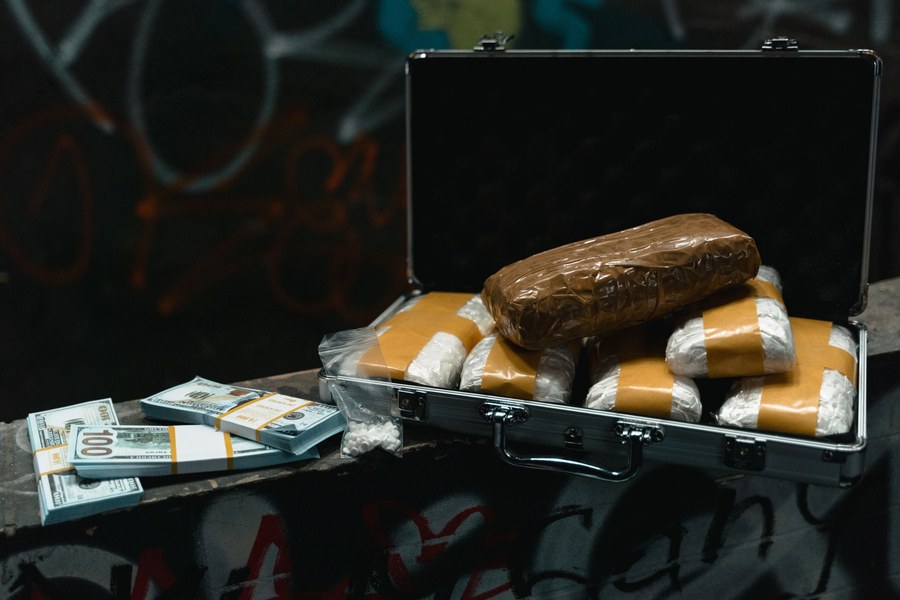
Here’s something most people don’t realize until they’re sitting across from a prosecutor: California doesn’t actually have a crime called “drug trafficking.” That word gets thrown around on the news, in police reports, and in panicked late-night searches, but you won’t find it in the Health and Safety Code. What you will find is a cluster of separate offenses, each with its own penalty range, and the difference between them can mean years of your life. If you or a loved one is facing drug-sales charges, David P. Shapiro Criminal Defense Attorneys handles these drug crime cases across San Diego County. This guide breaks down what you’re actually charged with, what it carries, and where the defense begins.
Is Drug Trafficking Even a Real Charge in California?
No. “Drug trafficking” is a colloquial umbrella term, not a California statute. What people call trafficking gets prosecuted under several distinct code sections, most commonly possession for sale (HS 11351)¹, transportation or sale of a controlled substance (HS 11352)², and their methamphetamine counterparts. Each carries different penalty exposure. The label on the news is not the label on the charging document.
Why does this matter? Because the code section you’re charged under determines everything that follows. Someone arrested with cocaine and a scale might face HS 11351, a felony carrying two, three, or four years in “local prison” i.e. county jail.¹ Someone caught moving those same drugs across county lines faces HS 11352, which pushes the range up to three, four, or five years.² Same substance, very different exposure.
The reality is, when our attorneys first review a case labeled “trafficking,” step one is figuring out what statute the prosecution actually filed under, and whether the facts support it. That single question often reshapes the entire defense.
What’s the Difference Between Possession for Sale and Transportation?
Possession for sale (HS 11351) means you held drugs with intent to sell them, punishable by two, three, or four years in county jail under Penal Code 1170(h).¹ Transportation or sale (HS 11352) covers actually moving, selling, furnishing, or giving away those drugs, and carries three, four, or five years.² Transportation across two or more noncontiguous county lines jumps to three, six, or nine years.²
The Substance Matters
These two statutes cover what the law treats as narcotics, heroin, cocaine, cocaine base, and similar drugs. Methamphetamine and other stimulants get charged separately. Possession of meth for sale falls under HS 11378, and transporting or selling it falls under HS 11379. The penalty structures are similar in spirit but the code sections are different, and prosecutors charge them precisely.
The Transportation Wrinkle
Here’s a distinction that saves real people real time. Since a 2014 amendment, “transports” under HS 11352 requires transport for sale, not merely moving drugs for your own personal use.² If you were driving with drugs meant for your own consumption, that’s a different, far less serious situation than the transportation charge suggests. Prosecutors don’t always draw that line for you. We do.
How Do Prosecutors Prove You Intended to Sell?
In most sales cases, there’s no witnessed transaction. Prosecutors build intent circumstantially, from the surrounding evidence rather than a caught-in-the-act sale. Under HS 11351, intent to sell is an actual element the state must prove beyond a reasonable doubt.¹ Miss that element, and the felony sales charge can collapse into simple possession.
What does circumstantial proof look like? Quantity beyond personal use. Multiple small baggies. A digital scale. Pay-owe sheets. Large amounts of cash in mixed denominations. Text messages that read like a menu. The absence of personal-use paraphernalia. No single item proves intent, but prosecutors stack them into a narrative.
That narrative is exactly where our attorneys focus. In our experience, sales charges often rest entirely on this circumstantial foundation, and that foundation has weak points. Was the quantity actually consistent with personal use for someone with a heavy habit? Did the cash have an innocent source? Were the texts misread? We can, and will, challenge the intent element if the facts support a position to do so. Because the difference between HS 11351 and simple possession under HS 11350, a misdemeanor,³ is the difference between prison exposure and a very different conversation.
When Does a San Diego Drug Case Go Federal?
San Diego cases go federal when they touch the border, involve large quantities, or connect to a broader distribution network. Because this county sits on the busiest land border in the hemisphere, cases involving crossings at San Ysidro or Otay Mesa, false-compartment vehicles, or multi-defendant operations frequently get picked up by federal authorities and charged in the U.S. District Court for the Southern District of California.
This fork changes everything. Federal charges under 21 USC 841 (manufacturing, distributing, or possessing with intent to distribute) carry mandatory minimums triggered by drug weight, ranging from five years up to life for large-quantity Schedule I and II offenses.⁴ Conspiracy under 21 USC 846 carries the same maximum penalties as the underlying offense, and it requires only an agreement plus an overt act, not an actual completed sale.⁵
The federal system swaps California’s flexible sentencing for the Sentencing Guidelines and rigid mandatory minimums. That’s why our team looks at this fork early. A case that could be charged in either forum needs to be understood in both from day one.
Does a Gun Turn a Drug Case Into a Prison Case?
Yes, and dramatically so, especially in federal court. Under 18 USC 924(c), using, carrying, or possessing a firearm during a drug trafficking crime adds a mandatory consecutive sentence: five years for possession, seven for brandishing, ten for discharge.⁶ “Consecutive” is the key word. That time stacks on top of the underlying drug sentence and cannot run concurrently.⁶
Think about what that means in practice. A defendant facing a federal distribution charge who had a handgun in the same vehicle isn’t looking at one sentence. They’re looking at the drug sentence plus a separate five-year block bolted onto the end, minimum. A second 924(c) conviction jumps that mandatory add-on to twenty-five years.⁶
California has its own armed-while-possessing provisions that similarly escalate exposure. The lesson is the same in either system: the presence of a firearm transforms the sentencing math. If a weapon is anywhere in your case, it changes the strategy immediately.
Can You Get Drug Diversion or Prop 36 for a Sales Charge?
Generally, no. California’s diversion programs, PC 1000 pretrial diversion and Prop 36 treatment, are built for possession-level offenses, not sales or trafficking. Simple possession under HS 11350 may qualify for diversion, and completion can result in dismissal.³ Sales and transportation charges are treated as commercial conduct and are excluded.
This is one of the most common and costly misconceptions we see. People assume “it’s a drug case, so I can just do treatment and move on.” That assumption fits possession. It does not fit HS 11351, HS 11352, or their meth equivalents. Those statutes carry state prison exposure precisely because the law treats selling differently than using.²
So where does the opportunity live? Often in the charge itself. If the prosecution can’t prove intent to sell, an HS 11351 charge may be reducible to HS 11350 simple possession, and that reduction can reopen the diversion door that the sales charge slammed shut.³ That’s not a guarantee. It’s a defense angle, and it’s one worth pursuing hard when the facts support it.
What Are the Common Defenses to Drug Sales Charges?
The strongest defenses attack the elements the prosecution must prove: knowledge, intent to sell, and the legality of how the evidence was obtained. Every one of these charges requires the state to prove you knew the substance was present, knew its nature, and, for sales counts, intended to sell it.¹ ² Each is a pressure point.
The Search Itself
When our attorneys review a drug-sales case, one of the first things we examine is whether the stop, the search, or the controlled buy was lawful. Many San Diego sales cases come out of Narcotics Task Force operations and informant-driven buys. If the search violated the Fourth Amendment, a motion to suppress under PC 1538.5 can knock out the evidence, and without the drugs, the case often becomes far more manageable.
The Intent Question
As covered above, intent to sell is frequently the whole ballgame. Possession for personal use negates the sales element entirely.¹
Maintaining a Place
A related charge, maintaining a location for drug sales or use under HS 11366, requires proof of an ongoing, repeated purpose, not a single isolated incident.⁷ It’s a wobbler, chargeable as a felony or misdemeanor,⁷ and the “continuous purpose” requirement is a genuine defense where the evidence shows only a one-time event.
What Immigration Consequences Follow a Drug-Sales Conviction?
A drug-sales conviction is among the most damaging convictions possible for a non-citizen. Under federal immigration law, controlled-substance and drug-trafficking offenses are treated as aggravated felonies, triggering near-automatic deportation and inadmissibility, often with no discretionary relief available. This applies to lawful permanent residents, visa holders, and undocumented individuals alike.
Given San Diego’s large immigrant and cross-border community, this stake is real and immediate for many of the people we represent. A conviction under HS 11351 or HS 11352 doesn’t just carry jail time.¹ ² It can end the ability to remain in, or ever return to, the United States.
Frequently Asked Questions
Is possession for sale a felony, or can it be reduced to a misdemeanor?
Possession for sale under HS 11351 is a felony, carrying two, three, or four years in county jail, and it was not reduced by Proposition 47.¹ It cannot simply be reclassified as a misdemeanor. The realistic path to a lesser outcome is disproving intent to sell, which can reduce the charge to simple possession under HS 11350.³
How much time do you actually serve for HS 11352 in California?
HS 11352 carries three, four, or five years, served in county jail under Penal Code 1170(h) realignment rather than state prison in most cases.² Transportation across noncontiguous county lines raises the range to three, six, or nine years.² Actual time served depends on custody credits, priors, and whether enhancements apply, so no fixed number fits every case.
What’s the difference between state and federal drug charges in San Diego?
State charges under HS 11351 or HS 11352 offer more flexible, county-jail sentencing.¹ ² Federal charges under 21 USC 841 impose mandatory minimums tied to drug weight and follow the Sentencing Guidelines.⁴ Border-related and large-quantity cases often go federal. Our attorneys assess this fork early, because the forum shapes the entire defense.
What happens to a car or cash seized in a drug case?
Money, vehicles, and property alleged to be connected to drug sales can be subject to civil asset forfeiture, a separate proceeding from the criminal case. You can contest a forfeiture, but the process runs on its own timeline and rules. It’s worth addressing quickly, because deadlines to claim seized property are unforgiving.
Contact David P. Shapiro Criminal Defense Attorneys About Drug Trafficking Charges in San Diego
What gets called “drug trafficking” is really a set of distinct felony charges, and the specific statute, the alleged intent, and the way the evidence was gathered all shape what you’re truly facing. Every case turns on its own facts, and the border-driven state-versus-federal fork makes San Diego cases especially complex. If you’re facing drug-sales or transportation charges, contact David P. Shapiro Criminal Defense Attorneys to talk through your situation in a case evaluation.
References
¹ Health & Safety Code, § 11351 [“every person who possesses for sale or purchases for purposes of sale … shall be punished by imprisonment pursuant to subdivision (h) of Section 1170 of the Penal Code for two, three, or four years.”]
² Health & Safety Code, § 11352 [transportation, import, sale, furnishing, or giving away of specified controlled substances; punishable for three, four, or five years, or three, six, or nine years for transport across noncontiguous county lines].
³ Health & Safety Code, § 11350 [possession of a controlled substance; misdemeanor punishable by up to one year in county jail post-Proposition 47; diversion eligibility].
⁴ 18 U.S.C. § 841 [manufacturing, distributing, or possessing with intent to distribute a controlled substance; mandatory minimums and penalty ranges by substance and quantity].
⁵ 18 U.S.C. § 846 [conspiracy to manufacture, distribute, or possess with intent to distribute; same maximum penalty as the underlying offense].
⁶ 18 U.S.C. § 924(c) [use, carrying, or possession of a firearm during a drug trafficking crime; mandatory consecutive sentences of 5, 7, or 10 years, and 25 years for a second offense].
⁷ Health & Safety Code, § 11366 [opening or maintaining a place for the purpose of unlawfully selling, giving away, or using a controlled substance; wobbler punishable as a misdemeanor or felony].
Author Bio

David P. Shapiro, the managing partner and founder of a leading San Diego criminal defense firm, is driven by an unwavering commitment to providing the best possible representation to his clients facing criminal charges. With a deep understanding of the fear, uncertainty, and concern for one’s future that his clients experience, David approaches each case with empathy and dedication, advocating tirelessly for their rights and freedoms.
Focused on complex and high-stakes cases, David handles a wide range of serious charges, including felonies, violent crimes, sex crimes, drug offenses, and white-collar crimes. Since establishing his practice in 2010, David has earned a reputation as one of San Diego’s most respected criminal defense attorneys.
His firm has been recognized by LawFirm500 as one of the nation’s fastest-growing law firms and was a 2022 Better Business Bureau Torch Award for Ethics Winner. The San Diego Business Journal named David’s firm the 17th Fastest Growing Private Company in San Diego from 2019-2021 and recognized David as one of San Diego’s 500 Most Influential People in 2022. With a strong dedication to his clients and community, David continues to be a driving force in the San Diego legal landscape.
Recent Posts



PRACTICE AREAS


Facing Criminal Charges in San Diego?
Here’s what you need to know to regain control of your future