I Was Charged with Felon in Possession of a Firearm – What Are My Defense Options?
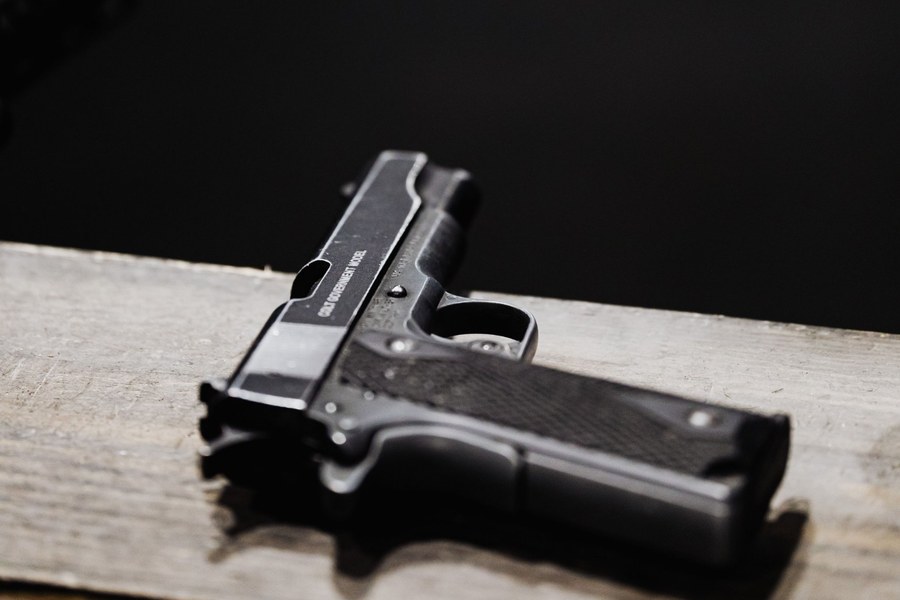
Here’s what most people don’t realize when they get charged under California Penal Code § 29800: the prosecution doesn’t have to prove you knew you weren’t allowed to have the gun. They only have to prove you knew the gun was there. That distinction changes everything about how these cases get fought. A felon-in-possession charge is a straight felony with real state-prison exposure, but a charge is not a conviction, and the defense options are often stronger than people assume. David P. Shapiro Criminal Defense Attorneys helps people facing weapons charges in San Diego understand exactly what the state must prove and where it tends to fall apart. Here’s the breakdown.
What does the prosecution have to prove for a PC 29800 charge?
To convict you under PC 29800, the prosecution must prove three things beyond a reasonable doubt: that you possessed, owned, or had custody of a firearm, that you knew you possessed it, and that you had a qualifying prior conviction or prohibiting status.¹ Miss any one of those, and the charge fails.
Notice what’s missing from that list. The prosecution does not have to prove you knew you were legally prohibited. That surprises a lot of people. The knowledge element is about knowing the gun was there, not knowing the law barred you from having it.
So where does the defense begin? Right at those three elements. The prior conviction is usually documented and hard to contest. That leaves the two elements that actually get litigated in real cases: possession and knowledge. The rest of this post walks through how each of those becomes a defense.
Did you actually “possess” the firearm? Actual versus constructive possession
Possession in a PC 29800 case comes in two forms. Actual possession means the gun was on your person. Constructive possession means the firearm was somewhere under your control, like a glove box or a shared closet, even if it wasn’t in your hand. The prosecution loves constructive possession because it stretches the reach of the charge, and that’s exactly why our attorneys attack it.
Picture a common scenario. Police search a car with three people in it and find a handgun under the passenger seat. Whose is it? The gun didn’t announce an owner. If you were sitting in the back, or if the car belonged to someone else, the state has a real problem tying that firearm to you specifically.
The same logic applies to shared living spaces. A gun found in a house where four people live is not automatically your gun. Our attorneys frequently examine whether the prosecution can actually connect the firearm to our client rather than to another person with equal access to the same space. Access is not ownership. Presence is not control.
That’s the weakness in a constructive possession case. And it leads directly to the next question the state has to answer.
What if you didn’t know the gun was there?
If you genuinely did not know a firearm was present, you cannot be convicted under PC 29800, because knowledge of the possession is a required element.¹ This is one of the most underused defenses in these cases, and it comes up more than people think.
Consider the borrowed car. You drive a friend’s vehicle to the store, get pulled over, and there’s a pistol in the trunk you never knew existed. Or you move into an apartment and the previous tenant left a firearm in a storage crawlspace. In both situations, the state has to prove you actually knew the gun was there. Suspicion isn’t enough. A guess isn’t enough.
This is where the facts matter enormously. Was the firearm visible or hidden? Was it in your personal belongings or someone else’s? Did anyone else have access? In our experience, the knowledge element becomes a live fight whenever the gun turns up in a shared or borrowed space rather than on the client’s body.
The prosecution will try to infer knowledge from the circumstances. We can, and will, challenge that inference if the facts support a position to do so. But knowledge disputes often lead to an even bigger question, which is how the gun was found in the first place.
How an unlawful search can get the firearm thrown out
If police found the firearm through an illegal search, that evidence can be suppressed, and without the gun there is often no case left to prosecute. The Fourth Amendment protects you against unreasonable searches, and a successful suppression motion can end a PC 29800 case before it ever reaches a jury.
Think about where these charges actually come from. In San Diego, felon-in-possession cases frequently begin with a traffic stop, a probation or parole search, or a domestic-disturbance call where officers end up searching a home or vehicle. Each of those contact points has legal rules. Was the traffic stop justified? Did the search exceed the scope of consent? Was the probation condition actually triggered?
In our experience, how the firearm was discovered often determines whether a PC 29800 charge survives at all. The traffic stop, the consent question, the reach of a parole search, these details decide cases. Our team looks hard at the moment of discovery, because that’s frequently where the whole prosecution rests on shaky ground.
When the search was unlawful, the remedy is a motion to suppress. Win it, and the physical foundation of the case disappears.
Am I a “prohibited person” if my prior wasn’t a felony?
Not everyone charged with firearm prohibition is a “felon” in the way they picture. California bars firearm possession for several categories of people, and only some involve a prior felony. If your prohibiting basis is something other than a felony conviction, the case against you may look very different.
When a court order is the basis
If a restraining or protective order prohibits you from having a firearm, possession in violation of that order is charged under Penal Code § 29825, which can be filed as a felony or a misdemeanor.² This is a different legal path than a felon-in-possession charge, and the defense analysis shifts accordingly.
When a juvenile record is the basis
Certain juvenile adjudications can trigger a firearm prohibition under Penal Code § 29820, chargeable as a felony or misdemeanor.³ People are often shocked to learn a juvenile ward status can restrict gun rights years later.
The misdemeanor prohibition
California also imposes a firearm prohibition on people convicted of certain misdemeanors, including some domestic-violence offenses. This is a real and common source of confusion, because these individuals don’t think of themselves as prohibited at all. The exact rules turn on the specific prior, and identifying which prohibiting statute actually applies to you is the first step in building a defense.
Understanding which category you fall into matters, because it also shapes whether you can ever restore your rights.
Can I ever legally own a firearm again? Rights restoration in California
Sometimes, but the path depends heavily on your specific prior conviction, and one very common assumption is flat wrong. An expungement under Penal Code § 1203.4 does not, by itself, restore your firearm rights.⁴ That myth costs people dearly.
The expungement misconception
A 1203.4 dismissal cleans up your record for many purposes, but it does not lift a firearm prohibition tied to a felony conviction. In our experience, many people wrongly assume an expungement gave their gun rights back. We help clients understand what actually removes a prohibition and what doesn’t, because acting on the wrong assumption can lead directly to a new PC 29800 charge.
Reducing a wobbler prior
If the underlying prior was a wobbler felony, reducing it to a misdemeanor under Penal Code § 17 can, in some circumstances, affect firearm eligibility.⁵ This is fact-specific and carries important carve-outs, particularly for domestic-violence misdemeanors and violent priors.
Prop 47 redesignation
Where a prior felony has been redesignated a misdemeanor under Penal Code § 1170.18, whether the firearm prohibition survives is a nuanced question that depends on the offense.⁶ None of these pathways is automatic, and none should be assumed without a careful review of your record.
There’s also a harder version of this charge worth understanding before you count on any restoration path.
Penalties and the harsher PC 29900 charge
A PC 29800 conviction is a felony that carries state-prison exposure, and if your prior was a violent offense, the exposure gets worse and the reduction options narrow.¹ These are not charges to take lightly, and the specific sentence depends on your record and any enhancements.
Here’s the contrast that matters. If your prior conviction was a violent felony, you may be charged under Penal Code § 29900 instead, which is always a felony and does not offer the same reduction path.⁷ The prior-violent-offense version of this charge forecloses options that might otherwise exist under PC 29800.
For San Diego’s large active-duty population, there’s an added layer. A weapons felony can carry career and security-clearance consequences that exist entirely apart from the criminal sentence. That collateral exposure is a real stake, and it’s worth addressing early rather than after the fact.
What happens if the ammunition charge is filed too?
PC 29800 rarely travels alone. If police found ammunition along with the firearm, you may also face a charge under Penal Code § 30305, prohibited possession of ammunition, which is a wobbler that can be filed as a felony or misdemeanor.⁸ In San Diego, this companion charge is common.
Prosecutors also frequently stack carrying counts, like carrying a concealed firearm or carrying a loaded firearm in public, on top of the possession charge. The result is a charging picture that looks heavier than a single count would suggest.
Here’s the strategic point. Many of these companion charges rise or fall on the same facts, especially the legality of the search. Knock out the search, and the ammunition count often goes with the gun. Our team looks at the full stack of charges as one connected problem, not a series of isolated counts.
Could this become a federal case?
Yes. The same conduct that violates PC 29800 can also be charged federally under 18 USC § 922(g), which makes it a crime for a prohibited person to possess a firearm or ammunition.⁹ Federal exposure is serious, carrying up to 15 years in prison.⁹
Why does this matter? Because federal prosecutors sometimes pick up these cases when a state charge would carry a lighter sentence. Federal law also applies constructive possession, meaning a firearm in an area under your control can support the charge even without it being on your person.⁹
And here’s a consequence people miss: restoring your firearm rights under California law does not automatically cure a federal prohibition. The two systems operate separately. If federal charges are on the table, or even possible, that changes the entire calculation, and it’s not something to navigate without knowing the stakes.
Frequently Asked Questions
Does expungement under PC 1203.4 restore my gun rights in California?
No. An expungement under Penal Code § 1203.4 does not restore firearm rights for someone prohibited due to a felony conviction.⁴ This is one of the most common and costly misconceptions we see. In our experience, people act on this false assumption and end up facing a new possession charge. A dismissal helps your record in other ways, but it does not lift the firearm prohibition by itself.
Can a felon live in a house where someone else legally owns a gun?
Yes, but only if the gun is stored correctly.. Because California recognizes constructive possession, a firearm in a shared space you have access to could potentially support a PC 29800 charge, even if it belongs to someone else.¹ The safest approach is that the lawfully owned firearm be secured where the prohibited person has no access or control. Whether possession can be proven depends heavily on the specific facts.
What’s the difference between PC 29800 and PC 29900?
The prior conviction. PC 29800 covers firearm possession by someone with a qualifying prior, while Penal Code § 29900 applies specifically when the prior was a violent offense.⁷ PC 29900 is always a felony and does not offer the reduction pathways sometimes available under PC 29800. If your prior was violent, expect harsher exposure and fewer options.
Can a juvenile record trigger a firearm prohibition?
Yes. Certain juvenile adjudications can trigger a firearm prohibition under Penal Code § 29820, which can be charged as a felony or misdemeanor.³ Many people are surprised to learn that a juvenile ward status can restrict gun rights into adulthood. If a juvenile record is the basis for your prohibition, the defense analysis differs from a standard felon-in-possession case.
Contact David P. Shapiro Criminal Defense Attorneys About Felon in Possession Charges in San Diego
A PC 29800 charge turns on possession, knowledge, and how the firearm was found, and every one of those is contestable depending on the facts. Every case is different, and the right defense depends on your record, the search, and the specific prohibiting basis. If you or a loved one is facing a felon-in-possession charge in San Diego, contact David P. Shapiro Criminal Defense Attorneys to request a case evaluation and understand your options.
References
¹ Penal Code, § 29800 [prohibiting possession of a firearm by a person with a qualifying prior felony conviction or other prohibiting status; requiring knowing possession].
² Penal Code, § 29825 [prohibiting possession or purchase of a firearm in violation of a court order; chargeable as a felony or misdemeanor].
³ Penal Code, § 29820 [firearm prohibition for certain juvenile wards; chargeable as a felony or misdemeanor].
⁴ Penal Code, § 1203.4 [petition for dismissal; a dismissal does not, by itself, restore firearm rights for a person prohibited due to a felony conviction].
⁵ Penal Code, § 17 [reduction of a wobbler felony to a misdemeanor, which may affect firearm eligibility in some circumstances, subject to carve-outs].
⁶ Penal Code, § 1170.18 [Proposition 47 resentencing and redesignation of certain felonies to misdemeanors].
⁷ Penal Code, § 29900 [possession of a firearm by a person with a prior violent offense conviction; always a felony].
⁸ Penal Code, § 30305 [prohibited person in possession of ammunition; wobbler].
⁹ 18 U.S.C. § 922(g) [federal prohibition on possession of a firearm or ammunition by a prohibited person, including convicted felons; punishable by up to 15 years in prison; constructive possession applies].
Author Bio

David P. Shapiro, the managing partner and founder of a leading San Diego criminal defense firm, is driven by an unwavering commitment to providing the best possible representation to his clients facing criminal charges. With a deep understanding of the fear, uncertainty, and concern for one’s future that his clients experience, David approaches each case with empathy and dedication, advocating tirelessly for their rights and freedoms.
Focused on complex and high-stakes cases, David handles a wide range of serious charges, including felonies, violent crimes, sex crimes, drug offenses, and white-collar crimes. Since establishing his practice in 2010, David has earned a reputation as one of San Diego’s most respected criminal defense attorneys.
His firm has been recognized by LawFirm500 as one of the nation’s fastest-growing law firms and was a 2022 Better Business Bureau Torch Award for Ethics Winner. The San Diego Business Journal named David’s firm the 17th Fastest Growing Private Company in San Diego from 2019-2021 and recognized David as one of San Diego’s 500 Most Influential People in 2022. With a strong dedication to his clients and community, David continues to be a driving force in the San Diego legal landscape.
Recent Posts



PRACTICE AREAS



Facing Criminal Charges in San Diego?
Here’s what you need to know to regain control of your future